Windshield Recalibration Las Vegas | Clear Quality ADAS Recalibration
Windshield Recalibration Systems in Modern Vehicles
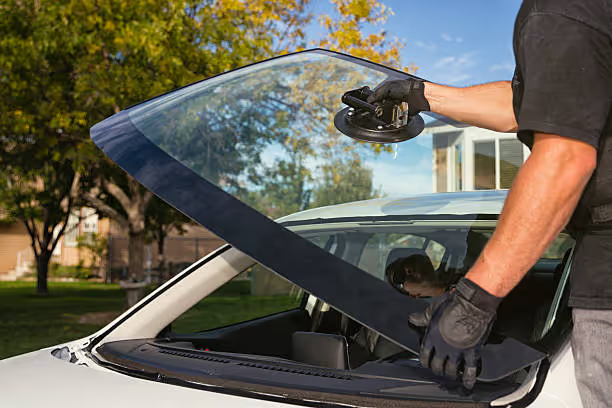
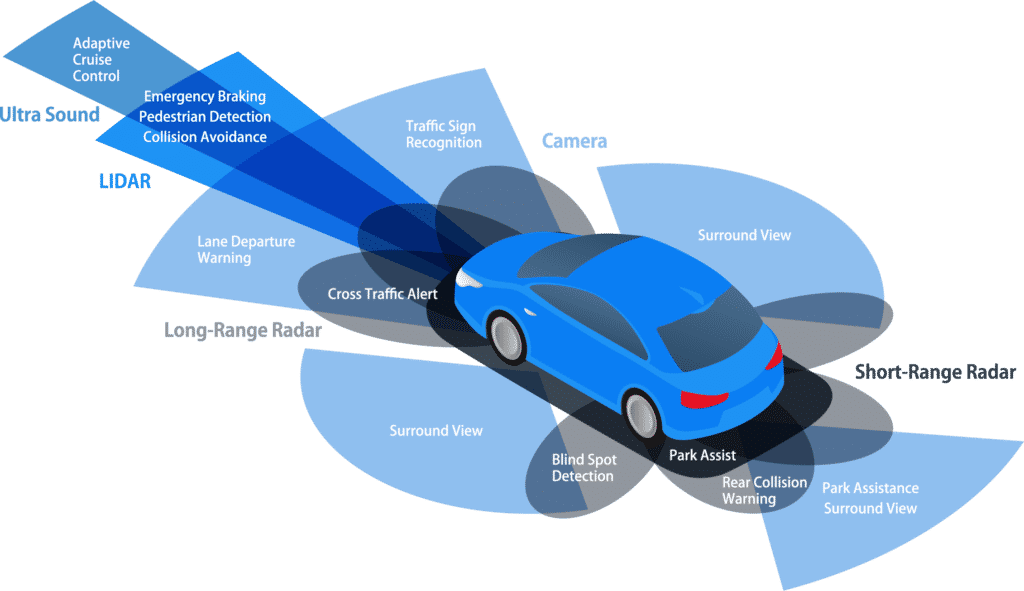
At a quick glance, your Las Vegas windshield might look like just a simple piece of glass, but actually, it is filled to the brim with incredible new technology and special sensors that allow it to communicate with the computer inside your car. Windshield recalibration sensors are the most common way of detecting and avoiding objects. The three main types of sensors are camera, radar and ultrasonic.
All of the systems in your car work together seamlessly to create a safe driving environment. Automobile manufacturers worldwide are consistently developing and installing new technology in their vehicles. Every new model year introduces new upgrades that improve fuel efficiency, driver comfort and most importantly, safety. In fact, these features are now required by most state and government regulations and will be implemented in all vehicles in the future.
Next, we’ll explain how all of these technologies work together and what you need to know – including why they are so important for driver safety.
What is ADAS Recalibration?
As you are driving, your vehicle is capturing and communicating all kinds of information from velocity, trajectory, grade, wind speed, and much more. The sensors in your windshield are providing important information about the road in front of you – looking for other vehicles or obstacles, construction zones, snow, rain, ice and even potholes.
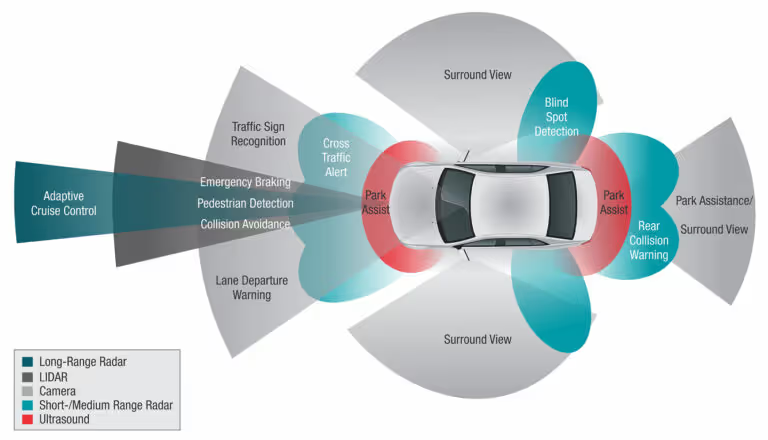
The sensors (in newer vehicles) around the car and in side-view mirrors are able to inform the driver if there is a vehicle in the traditional blind spot, which may be helpful and crucial to avoid an accident. A key feature in this process is a system called ADAS, or Advanced Driver Assistance System. It consists of many smaller systems working together. They are carefully designed to improve driver comfort and convenience while also making the roads safer and helping to minimize collisions.
Good To Know: The first ADAS calibration is performed at the factory before your vehicle ships.
Four Common Types Vehicle Safety Systems
Your windshield plays a big role in the accuracy of the data your vehicle is able to process. Let’s review a few of these in a little more detail and share why we recommend windshield recalibration each time there is a windshield replacement or windshield repair. it’s important to understand these systems when choosing a new windshield option for your vehicle.
Automatic Emergency Braking (AEB)
This system is designed to stop the vehicle when it detects that a collision is about to occur. It will alert the driver to make a correction, but if no actions are taken, an emergency brake will be automatically be applied to help prevent a collision from occurring. There is an alternative version of the AEB system called the forward-collision warning system, but it only monitors the distance between two vehicles. It alerts the driver, but usually does not include automatic braking features.
Pedestrian Automatic Emergency Braking (PAEB):
Similar to the AEB system, the PAEB is an automatic emergency braking system that identifies pedestrians on the road and adjusts the car’s speed to avoid a collision. This particular technology is different from other systems in that it designed specifically for preventing accidents involving pedestrians, even if the driver is distracted and has not taken precautions to adjust the speed of their vehicle.
Adaptive Cruise Control (ACC)
One of our favorite features is cruise control. It has been a manufacturing staple in vehicles for almost sixty years and provides a huge benefit on those long drives. This feature automatically maintains a consistent speed, allowing the driver to rest over several miles without needing to use the gas pedal. In recent years, newer versions of cruise control have been developed in an effort to make the driving experience more convenient and safer.
Using a myriad of cameras, radar, and sometimes a new technology called LiDAR (light detection and ranging), this technology regulates and maintains a safe distance from vehicles ahead. It allows drivers to set a specific speed or keep a safe speed range. If a vehicle ahead speeds up, the system will automatically slow the vehicle down and vice versa. This feature uses information from multiple onboard sensors to control this function. If there is no preceding vehicle within the set distance, the car will maintain the set cruising speed.
Lane Departure Warning System (LDW)
As any driver knows, changing lanes is inevitable on any length of drive. Usually, it’s a pretty straightforward process and doesn’t cause any issues. However, as we are human, there are times when we need some assistance. Perhaps because we didn’t see another vehicle in the lane next to us, or we’re sleepy and venture off course. In fact, according to the CDC in a recent article, up to 6,000 fatal crashes each year may be caused by drowsy drivers. The roads can be dangerous and safety should always be a priority.
The benefits of a lane departure warning system can assist in preventing very dangerous accidents. Usually, a warning sound or steering wheel motion will alert the driver each time there is a deviation from what is expected and observed. Another similar system to this is called the Lane Keeping Assist (LKA). This system can actually steer the vehicle back into the center of the lane, in an event where the response is not quick enough.
Typical ADAS Features
Simply put, ADAS is a type of advanced technology that is installed in vehicles to help them better comprehend their surroundings and become aware of potential scenarios in a semi-autonomous manner for safe driving. These are a few of the normal features you’ll find on vehicles equipped with ADAS.
- Lane-Keeping Assitance
- Tire-Pressure Monitoring
- Adaptive Headlights
- Surround View System
- Heads Up Display (HUD)
- Adaptive Cruise Control
- Forward Collision Warning
- Parking Assistance System
- Blind Spot Detection
- Autonomous Emergency Braking
- Lane Departure Warning
Do I Need My Windshield Recalibrated?
Yes, if your windshield has a camera. Vehicle manufacturers and insurance companies require recalibration after a windshield replacement. Without it, your safety systems will not work as intended, no matter what anyone tells you, even if no warning light comes on.
The camera has to be exact. A camera that is off by just one degree can misjudge where things are by about 8 feet at 100 feet down the road, according to BusinessDay. That can be the difference between braking in time or not, and between your lane departure warning alerting you or staying silent. Drivers trust these alerts every day, and many do not know the camera needs to be recalibrated after a new windshield.
What you get with every recalibration
- Pre-scan: a detailed diagnostic scan of all systems that records any trouble codes before we start.
- Recalibration of your forward-facing camera to the manufacturer’s specifications.
- Post-scan: as a courtesy, we clear all codes and scan again. Any code that is still active will show up again.
- Documentation: you receive the reports for your records and your insurance.
All recalibrations are done at our Main Shop, 5370 S. Decatur Blvd, Suite 3, where our equipment is. We take your safety seriously.
Do You Need Recalibration After a Windshield Replacement?
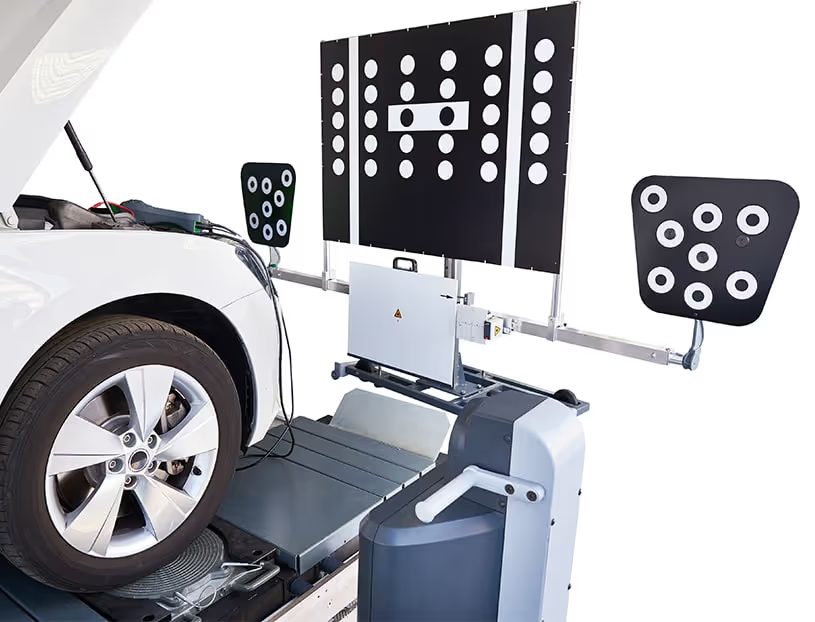
There are several types of ADAS recalibration tools and two different types of recalibration, static and dynamic.
Static Recalibration
This refers to a type of recalibration in a specifically tailored workshop or controlled environment. We can perform these tests quickly and get you back on the road without having to drive the vehicle. Our technicians are trained well and use specialized equipment such as a CSC (Camera and Sensor Calibration) tool, five line lasers, two line lasers, designated target or an ADAS recalibration tablet tool.
Dynamic Recalibration
Dynamic recalibration is usually performed by driving your vehicle for a specified distance, at a certain speed and in ideal weather conditions. We attach a small device to the vehicle that assists the technicians and makes the process a little more calculated. In this method, the car is prepared for all the different situations in which it will have to perform. This process usually does not require a specifically prepared environment to optimize recalibration. Instead, it requires putting the ADAS system in a learn mode. Certain driving maneuvers can influence how these dynamic recalibration estimates are obtained.
These maneuvers can include extensive turns, stronger acceleration, or smooth driving in a straight line. We may perform these maneuvers for a quicker more accurate recalibration result. In short, getting the recalibration right is essential for safety. Even minor miscalculations can lead to serious mishaps and accidents that could be avoided.
An Incredible Statistic
Results of a new study by the Institute for Highway Safety indicate that lane departure warning systems could actually help drivers avoid trouble. The study states that these advanced safety systems have lowered the rates of single-vehicle, sideswipe and head-on crashes by as much as 11%. It also states that the rates of injury crashes of the same type was lowered by by 21%.
As great as these advancements are, we should share that the ADAS technology is here to assist you, but it isn’t designed to be a driving replacement or even an auto-pilot. It’s imperative that attention be paid to the road while driving, at all times.
We have everything you need
Safety First (and always)
Clear Quality Auto Glass is one of the only auto glass repair shops in Las Vegas with specialized equipment to recalibrate an Advanced Driver Assistance Systems. This isn’t by accident. We have made great investments into training our team and building our infrastructure with the industry’s best recalibration equipment.
Schedule Your ADAS Recalibration Appointment
We are your one-stop-shop for auto glass repair and recalibration. Our team of specialists are well-trained to perform your recalibrations efficiently and get you back on the road safely.
Give us a call at (702) 468-9730 to book your next service. We are available to help with all of your recalibration needs. You can also visit us at our main shop on Decatur.
We hope to see you soon!